Angry ones do. That asymmetry is why a business with a thousand delighted customers has forty reviews and three of them are one star. We have built three versions of the fix now, for a clinic group, a restaurant and an agency, and the pattern is the same every time.

Every tool here was built for a real client with a real deadline, by the people in this room.
Every business we have built one of these for said the same thing in the first meeting. They know their customers are happy. They know reviews matter. And nobody on the team wants to stand there and ask, because asking feels like begging and half the time the customer says yes and then forgets.
A bad experience writes itself. A good one needs a prompt, and usually a reason.
"Tell us about your experience" on a phone keyboard is where good intentions go to die.
If the ask is awkward, it happens once, on a quiet day, and never again.
We never write the review. The customer answers a few tap-only questions, and their own answers become the draft. What comes out is recognisably theirs, which is the only version worth posting and the only version that survives a platform's own filters.
A clinic, a restaurant and an agency all need a review. What differs is who is standing there, how long they have, and what the review is for.

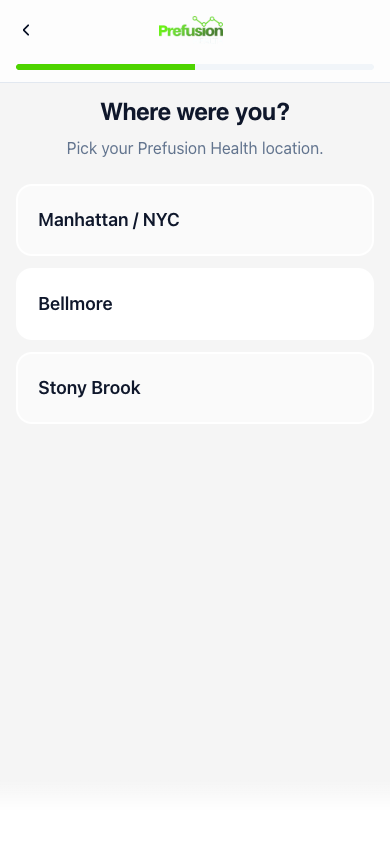
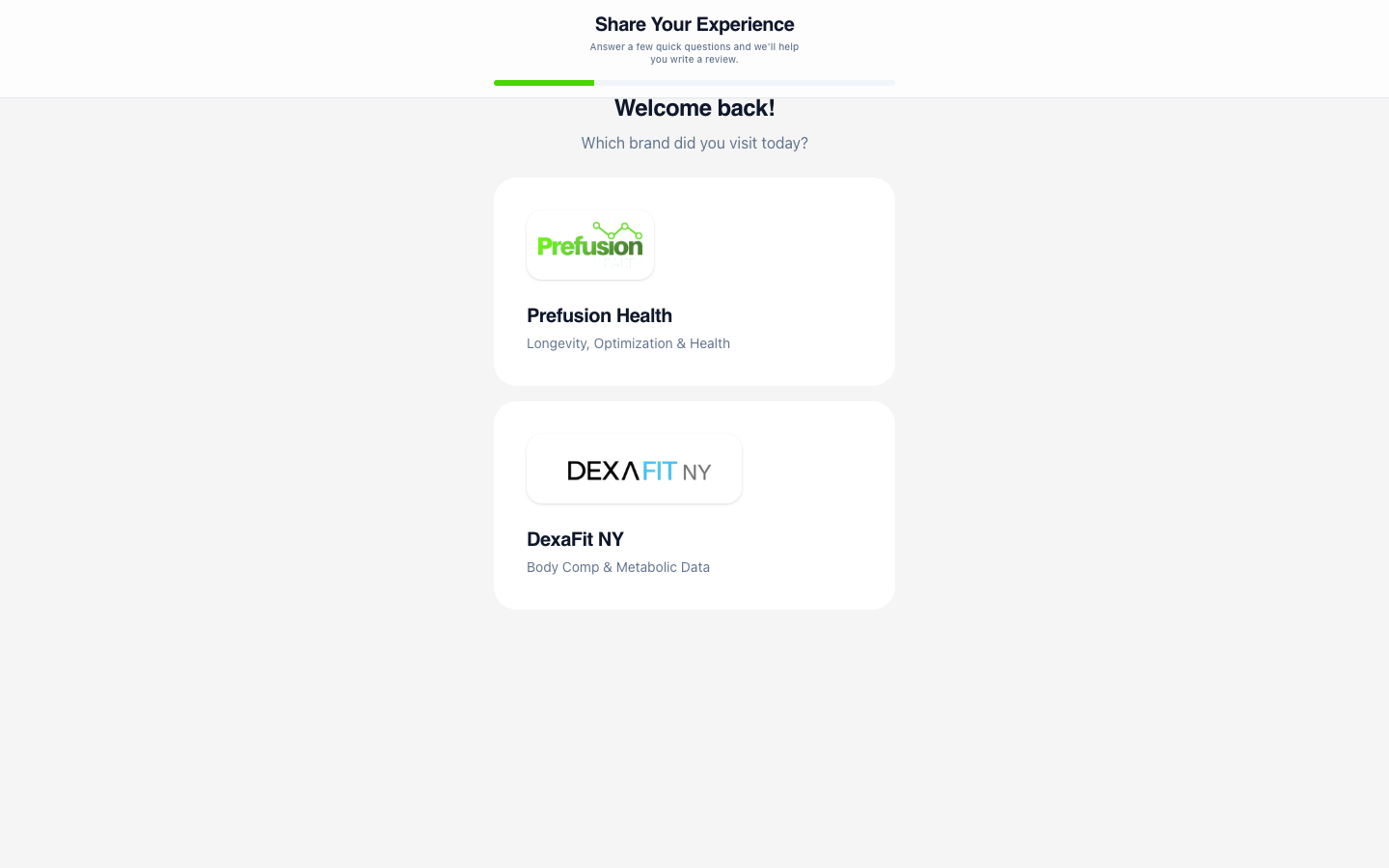
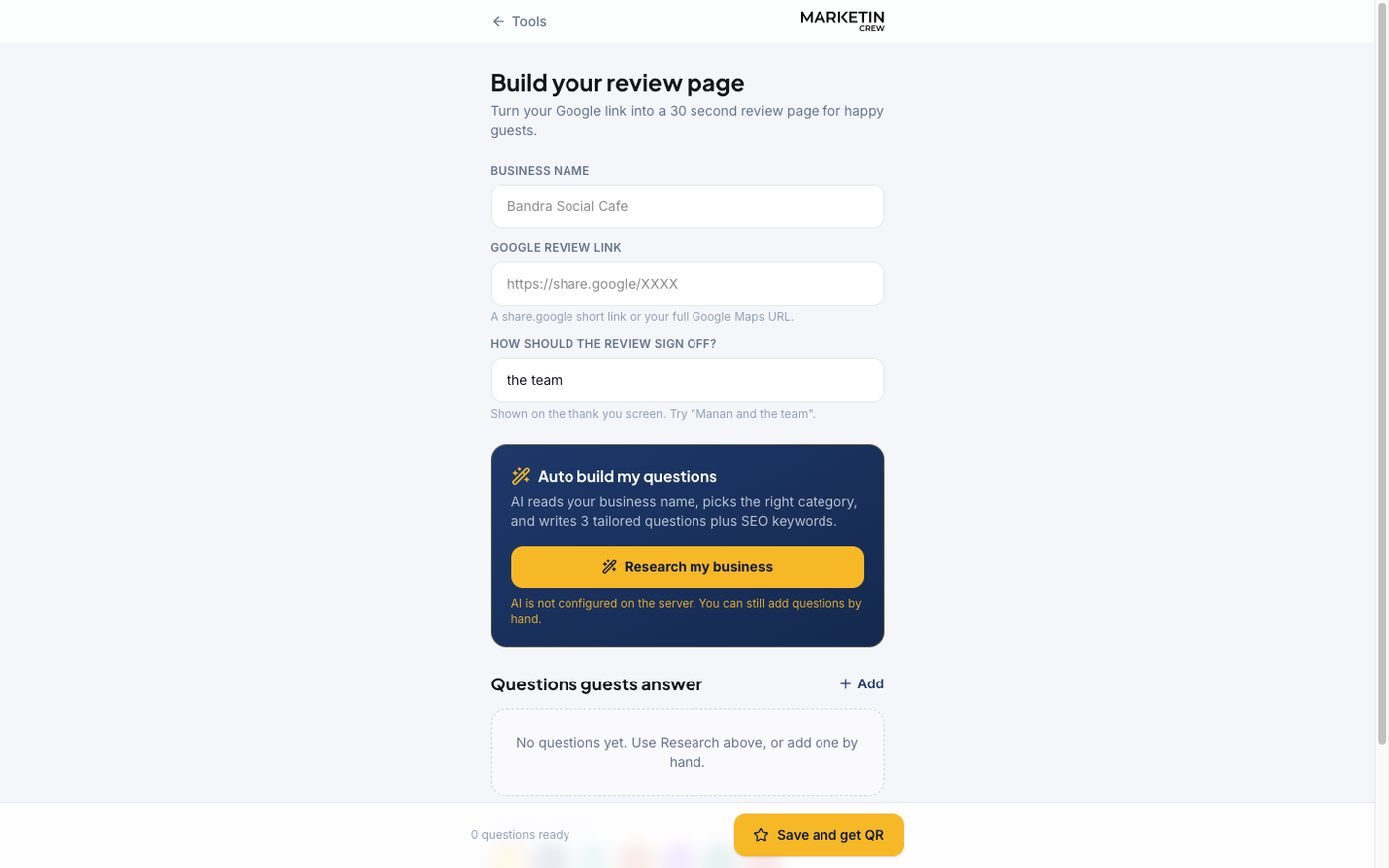
The client picks which brand they visited and which location, because a group with three sites needs the review to land on the right listing. Then a few prompts about the visit, and a polished review ready to paste.

A guest has about ninety seconds while the bill is settled. Three tap-only questions about the visit, their words become the draft, and they land on the Google review page with it ready.

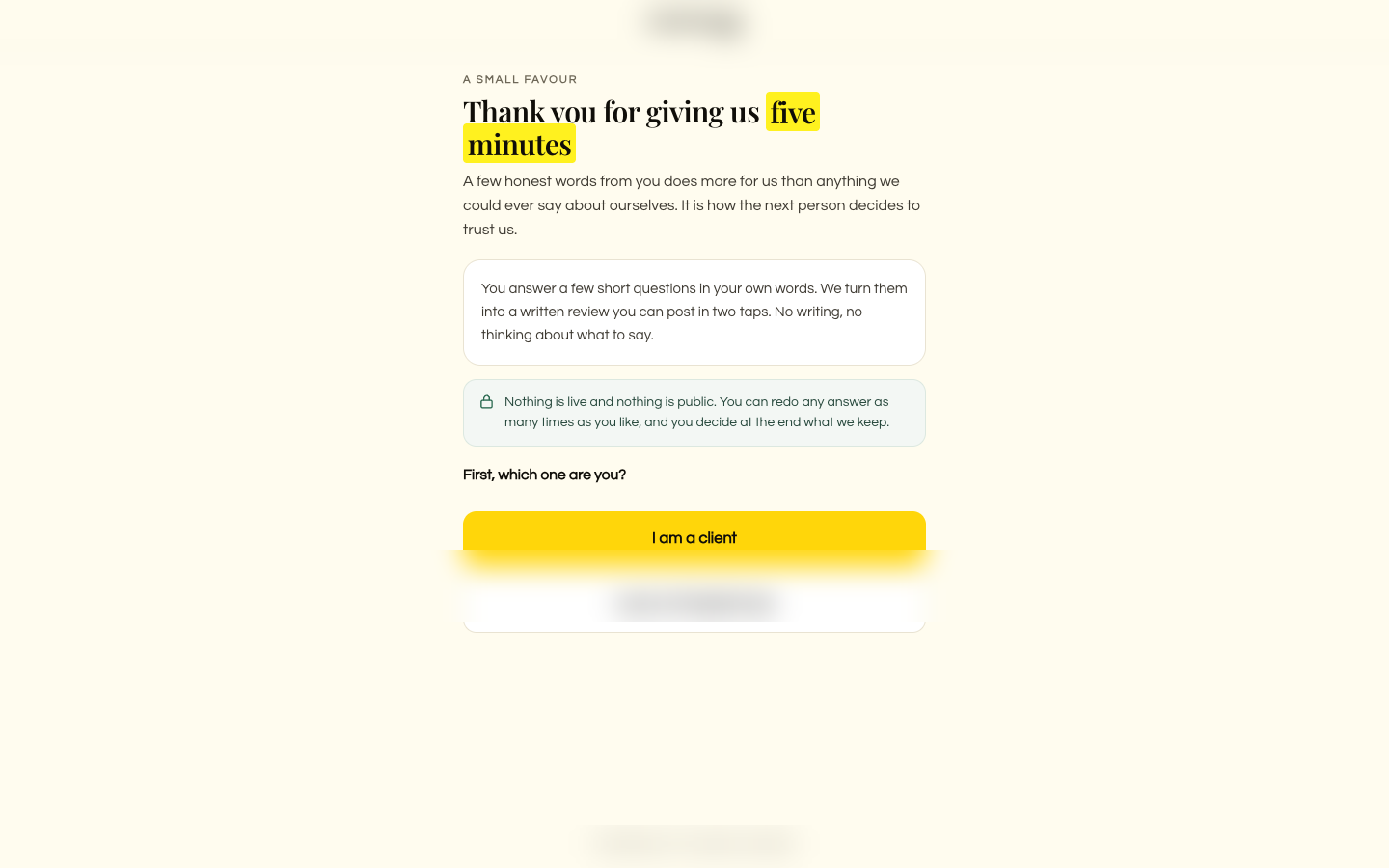
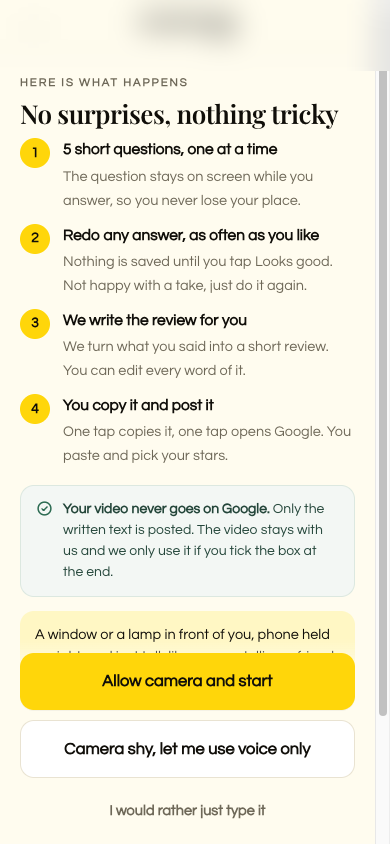
A written line is not enough for a services business, so this one records. Five short questions, one at a time, redo any answer as often as you like, and nothing saves until you tap looks good.
We never write the review. The customer answers a few questions and their answers become the draft.
Built three times: clinic, restaurant, agency.
At the moment the customer is happiest, not a week later.
So a group with three sites gets the review on the right listing.
Three to five, one per screen. Taps before typing, always.
Recognisably theirs, the only version worth posting.
The draft is copied and the right page opens.
Five short questions, redo any answer, consent is explicit.
A form with five fields reads as work. The same five questions, one per screen, reads as a conversation and gets finished.
Give people the shape of an answer to choose from. The typing, if any, comes after they are already committed.
Redo any answer as many times as you like. People give a better answer when they know the first one is not binding.
The draft is copied and the right review page opens. A review the customer has to go and find is a review that does not happen.
Especially with video. Nothing is live and nothing is public until the person says it can be, and they can redo any answer before that.