Case study Investment · India · IPO analysis

Five hundred pages.
Twenty minutes.

Every Indian IPO arrives as a prospectus of several hundred pages. An analyst reads it the same way every time, looking for the same things, and it takes days. We built the engine that runs their own twenty-two factor framework across the document and writes the findings report.

Sakaria Investments
Their framework · not a generic summary
The IPO intelligence engine
Factors applied
22
Report sections
7

22
factors, the client's own
7
sections in the findings report
571
pages in the first document it read
12-20
minutes per analysis
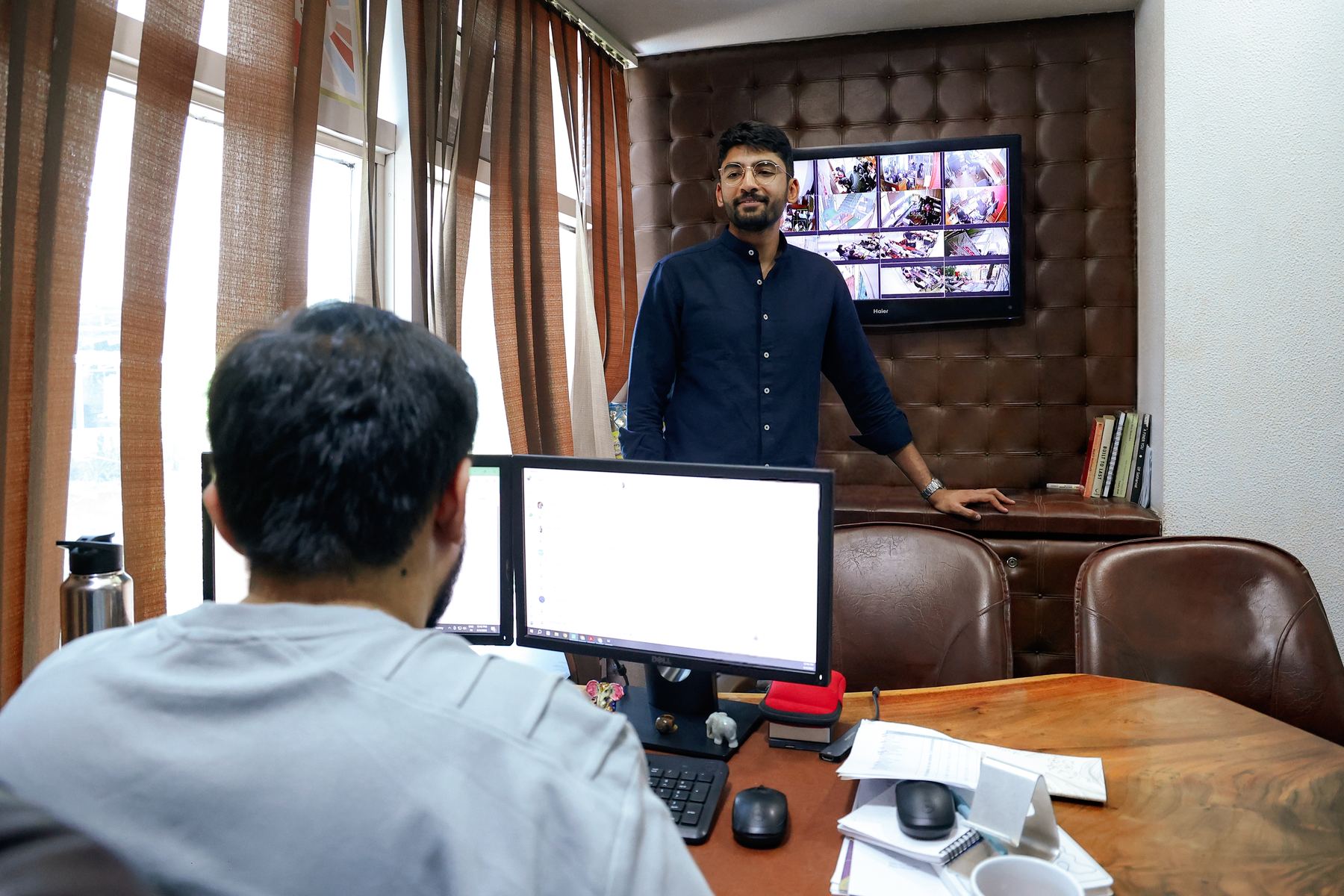
Manan Mehta with the AI Crew team in the Mumbai office
From our office
Built by a team you can call.

Twelve years of agency DNA behind every tool on this site.

01 · The situation

The work is identical every time. That is the whole opportunity.

A good analyst does not read an IPO prospectus front to back. They go looking for the same twenty-two things, in roughly the same order, in a document designed to make some of them hard to find. Doing that by hand is days of work, and the answer arrives after the window to act has narrowed.

menu_book
Hundreds of pages

The first prospectus it was tested on ran to 571 pages, with a draft version of 607 alongside it.

schedule
A narrow window

An IPO view is worth something for days, not weeks. Slow analysis is analysis nobody uses.

rule
Consistency is the product

Two analysts reading the same document should not produce two different frameworks.

What we did not build

A tool that reads a prospectus and gives you its opinion. The framework belongs to the client. The engine's job is to apply their questions faithfully to the document and show where each answer came from, not to have views of its own.

02 · How it works

Upload the prospectus. Get the report.

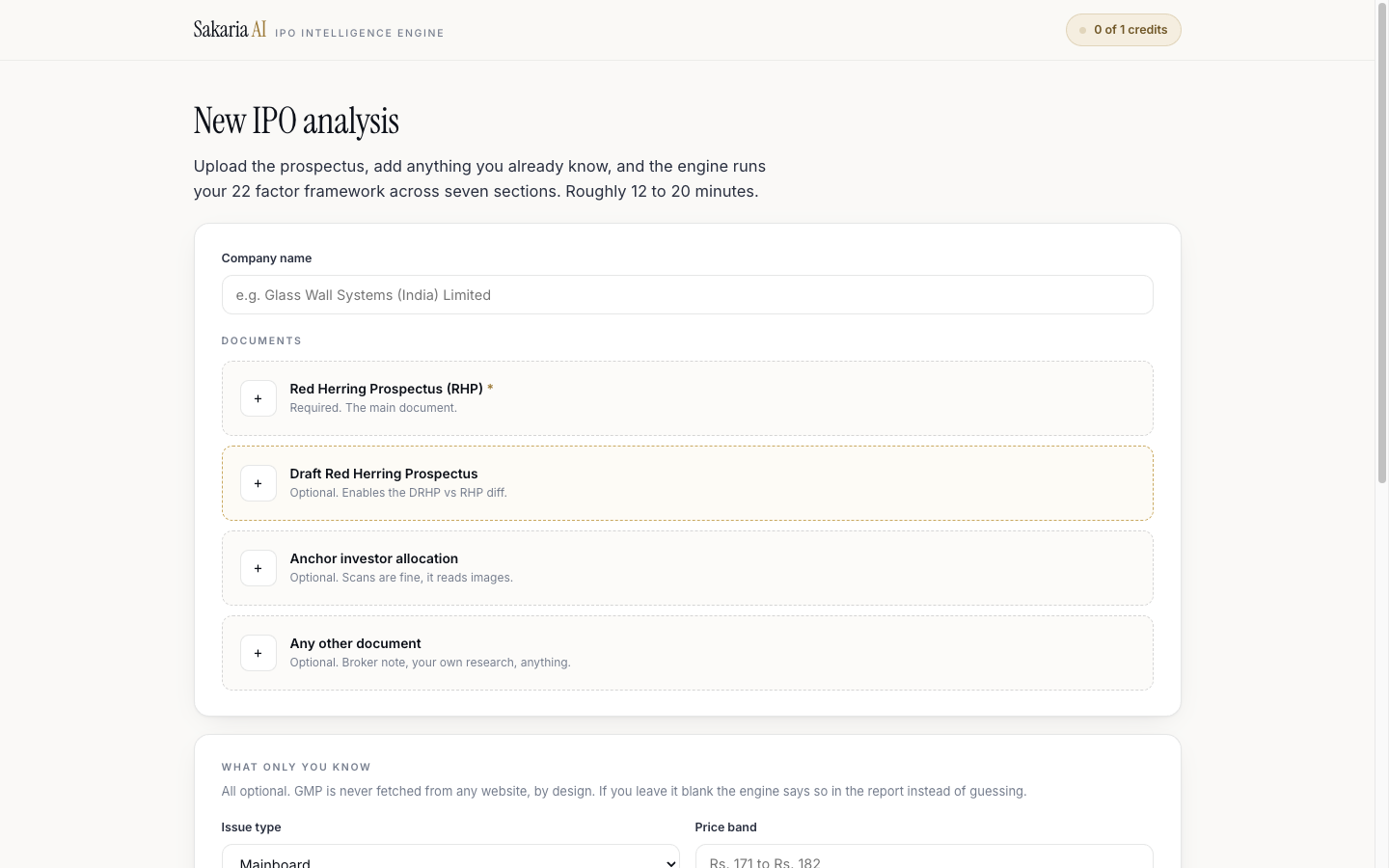
One screen, three documents, and a pipeline that works through the framework section by section instead of trying to swallow the whole book at once.

01
The documents go in

The prospectus, plus the draft version and the anchor allocation if they have them.

02
Anything already known

What the analyst already believes goes in as context, rather than being discovered again.

AI
The framework runs

Twenty-two factors across seven sections, as a sequence of passes rather than one enormous question.

04
The findings report

Written in the shape the analyst already uses, so it can be read the way the last one was.

The analysis screen
account_treeHow the engine works

The prospectus in. Their own framework's findings out.

A sequence of narrow passes, not one enormous question, so every answer can be checked.

Comes in
menu_bookThe prospectus571 pages on the first run
differenceThe draft, if they have it607 pages alongside
lightbulbWhat the analyst knowsGoes in as context
query_stats

IPO analysis engine

Their twenty-two factors, the same way every time.

  • check_circleMultiple passes, each with one job
  • check_circleSeven sections, one factor at a time
  • check_circleDraft against final, diffed
Goes out
summarizeThe findings reportIn the shape they already read
compare_arrowsWhat changed before listingSurfaced automatically
timer12 to 20 minutesStated before it starts
Analyst
upload_file01Upload the documents

The prospectus, plus the draft and anchor allocation if they have them.

Analyst
lightbulb02Add what is known

Context goes in rather than being discovered again.

Engine
account_tree03Run the framework

Twenty-two factors across seven sections, as a sequence of passes.

Engine
compare_arrows04Diff draft and final

The difference between versions is itself a finding.

Engine
summarize05Write the report

In the shape the analyst already uses.

Analyst
timer06Twenty minutes, not days

All twenty-two factors, in the same order, every time.

Built withaccount_treeMulti-pass pipelinemenu_bookLong-document handlingcompare_arrowsDraft vs final difflockPasscode gatedtollCredit metered
03 · The engineering decision

A long document is not one question.

The naive version of this tool pushes six hundred pages at a model and asks for a report. It produces something that reads well and cannot be checked. The version worth using breaks the framework into a sequence of narrower passes, each answering a specific factor against a specific part of the document.

A pipeline, not a prompt

Multiple passes, each with a job, so a weak answer in one section does not quietly contaminate the rest.

Sectioned
The draft against the final

When both versions are supplied, the difference between them is itself a finding. What changed before listing is often the interesting part.

Diffed
Their framework, verbatim

Twenty-two factors as the client defines them. We did not improve the framework, we automated it.

Faithful
Twelve to twenty minutes, stated up front

The screen tells you how long it will take before you start, because a tool that runs for an unknown time gets abandoned.

Honest
Case studies · built by the crew

More case studies. All live.

All case studies
04 · What changed

The framework stopped being a reading exercise.

Before
  • closeDays of reading per IPO, by the most expensive person available
  • closeThe framework applied from memory, slightly differently each time
  • closeDraft and final versions rarely compared, because who has the time
After
  • checkA findings report in twelve to twenty minutes
  • checkAll twenty-two factors, in the same order, every time
  • checkThe draft-versus-final difference surfaced automatically
Multi-pass pipelineLong-document handlingDraft vs final diffPasscode gatedCredit metered