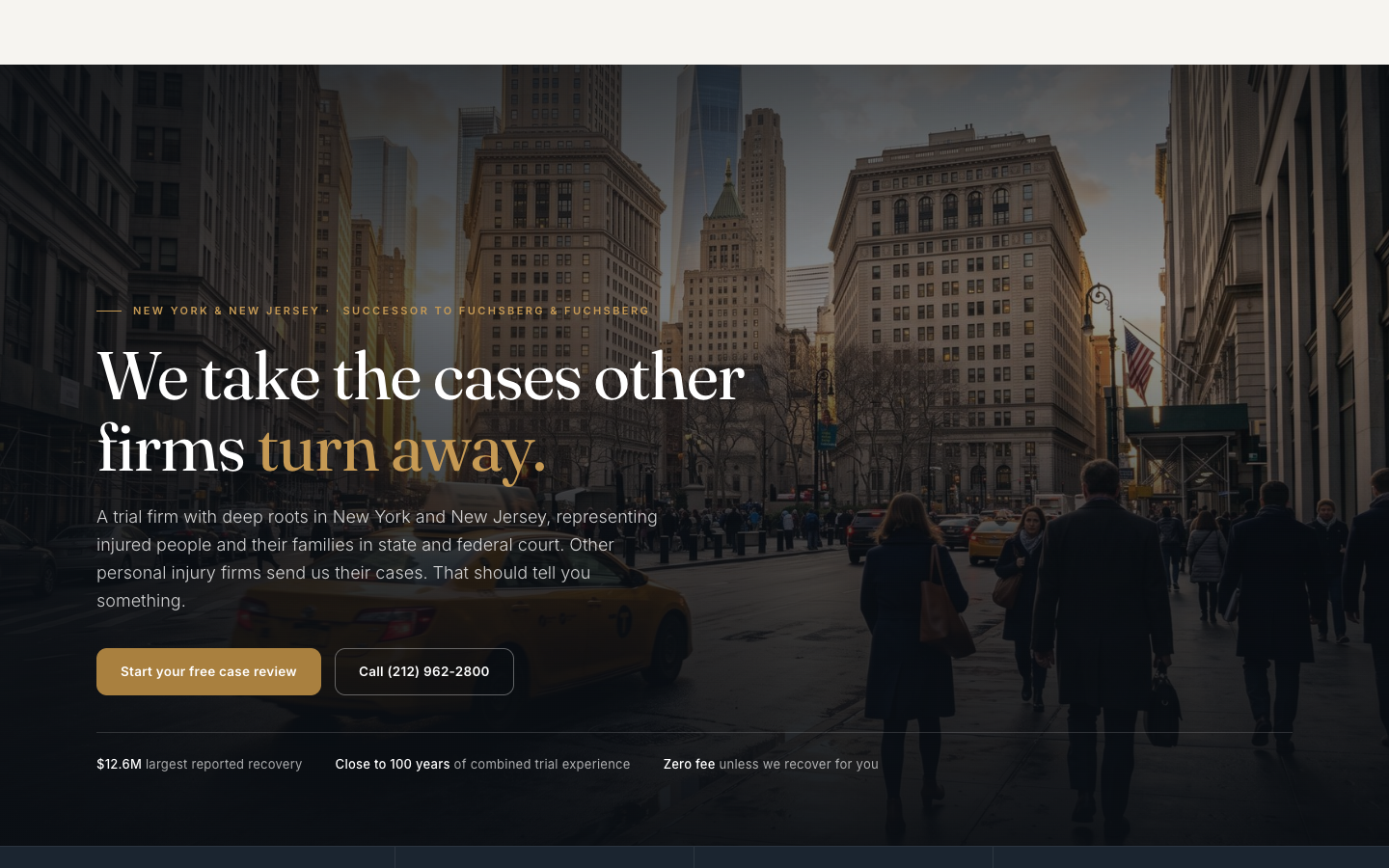
Schwartz Goldstone Campisi & Kates are a New York trial firm that takes the cases other firms turn away. We built them two things: an eighteen-page website with an intake that actually captures, and an engine that finds qualified cases from public accident records before anyone has picked up a phone.

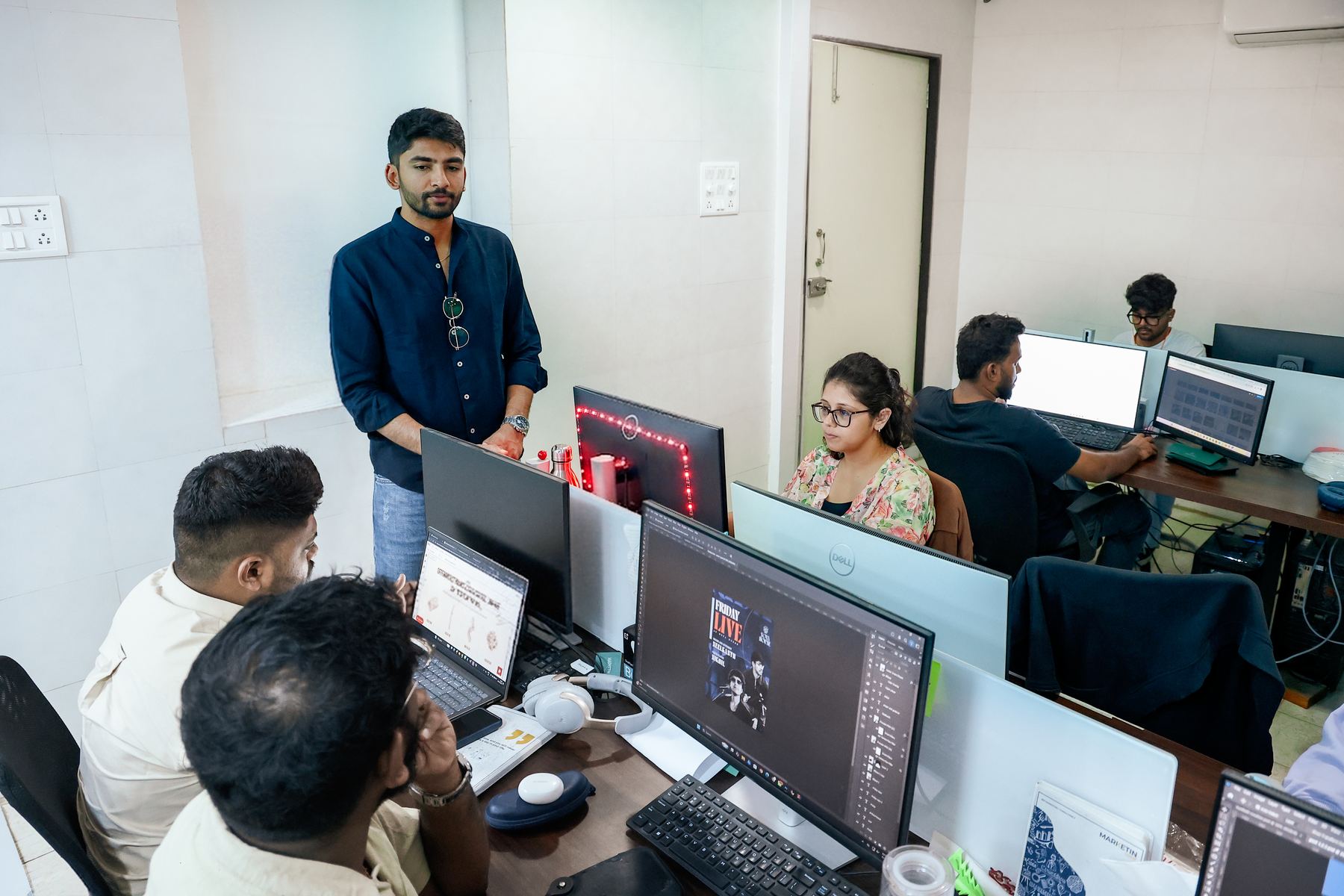
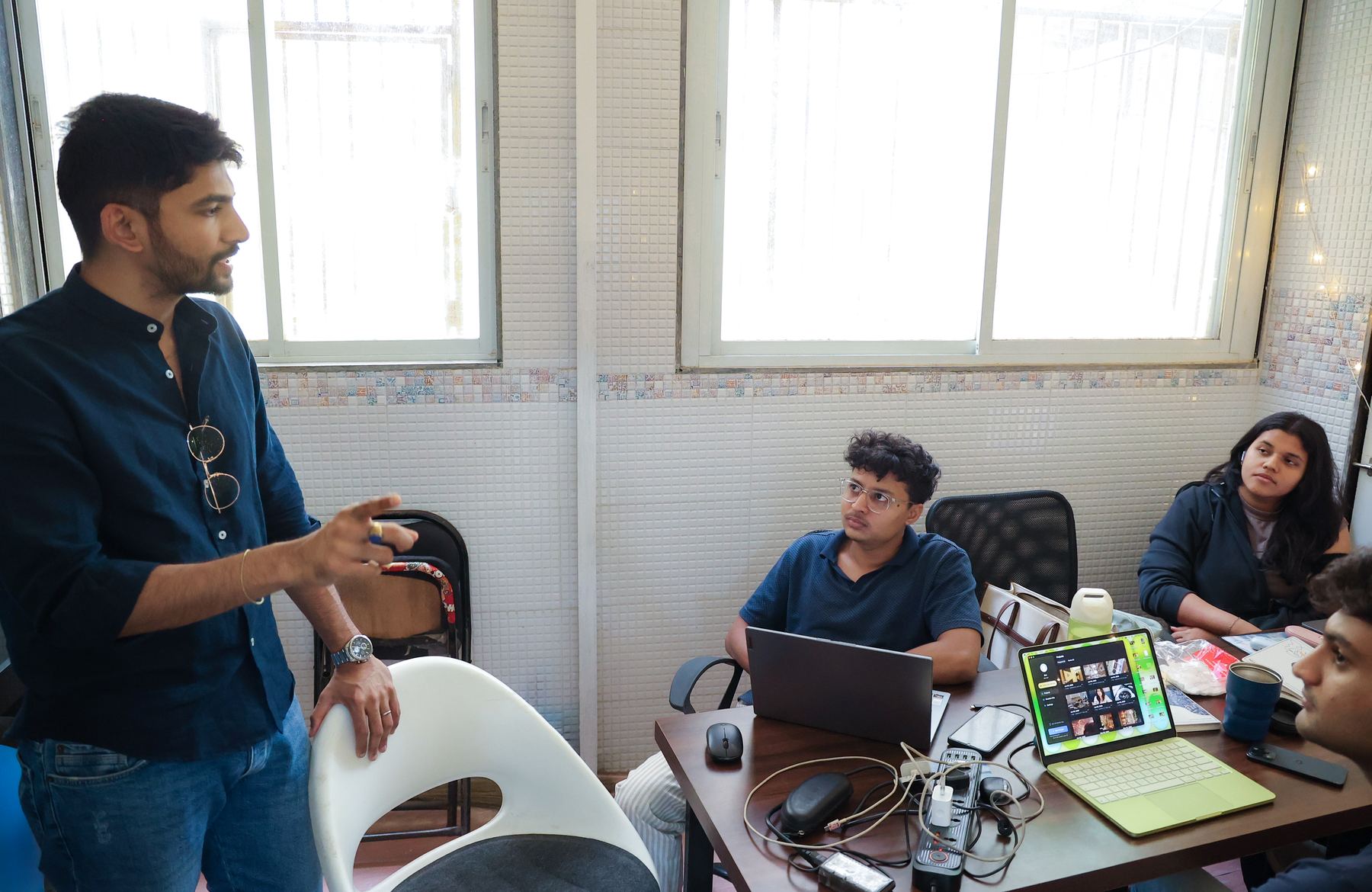
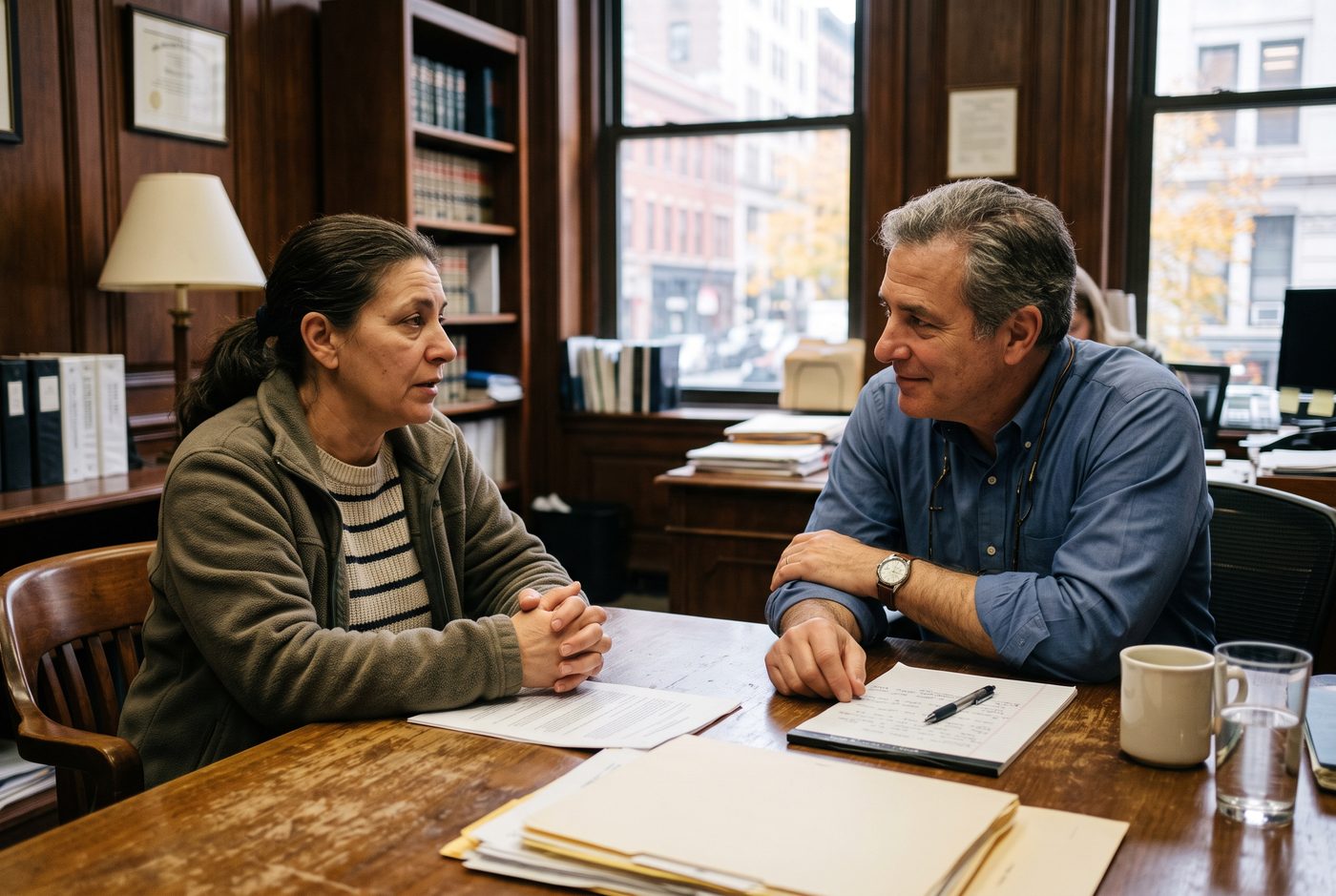
Founders and professionals talk to Manan. The building, testing and support happens here, in the room.
A trial firm with real verdicts behind it, competing for attention against national advertisers with enormous budgets. They were buying leads from a service and were not happy with what arrived. The work was excellent and the front door was closed.
Somebody reading at eleven at night could not do anything except write down a number and hope to remember.
The same lead reaches several firms at once. You are racing on response time, not on merit.
They do a lot of New Jersey work and federal litigation. Neither was visible anywhere on the old site.
Attorney profiles, sixteen practice areas, a legal insights library the firm writes into themselves, and an intake widget that does not read like a robot. That last part was the client's only strong dislike about a competitor's site, so it became the design constraint.

"We take the cases other firms turn away" was already how they described themselves. It became the first line on the page, over real verdicts rather than adjectives.

Docked to the side, opens by itself a few seconds in, and asks what happened before it asks who you are. Spanish offered on the first screen, because their clients ask for it.
Their own reported recoveries, carried across from their records onto the new site.
Two front doors: a site that captures, and an engine that finds cases before anyone calls.
Screens every case against the firm's own rules.
To the right custodian, with the statutory certification attached.
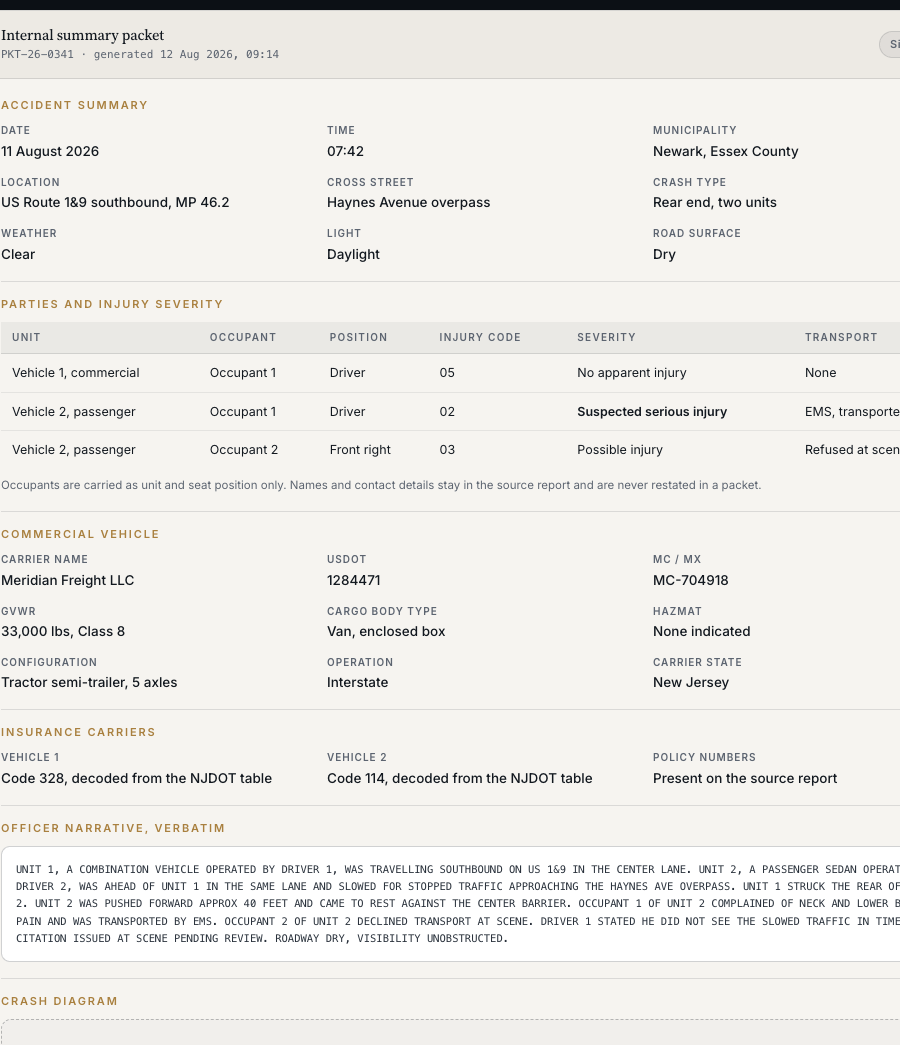
Parties, positions, injury codes, vehicles, carriers and insurers.
The firm's rules, applied the same way every time, so a decision can be explained.
A one-page summary with the source report underneath it.
Nothing sends without a human. The switch is the firm's to turn.
An intake that asks what happened before it asks who you are.
Every serious crash in New Jersey generates a police report, and those reports are obtainable under the state's public records act. The engine requests them, reads them, screens them against the firm's own criteria and builds a packet an attorney can act on. The firm is not competing for a lead. They are first.
A records request goes to the right custodian at the right department, with the statutory certification attached.
The reply comes back as a crash report. It is parsed into structured facts: parties, positions, injury codes, vehicles, carriers, insurers.
A deterministic screener applies the firm's rules. Same input, same answer, every time, so a decision can be explained.
What survives becomes a one-page summary an attorney reads in under a minute, with the source report underneath it.

A packet carries unit and seat position only. Names and contact details stay in the source report and are never restated.
Statutory response windows are counted properly, including holidays, because a missed day is a lost case.
A crash is only worth the firm's attention under specific conditions. The gate runs before anyone spends a minute on it.
If a department refuses, the engine assembles the challenge pack rather than dropping the request.
The certification wording is the firm's to write, and the send switch is theirs to turn. We do not sign anything on a law firm's behalf.
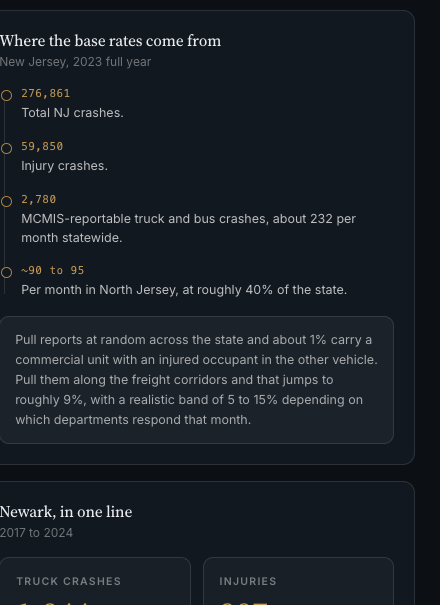
Before writing the engine we went and found out how many crashes New Jersey actually produces, how many involve a commercial vehicle with an injured occupant in the other car, and what the records themselves cost per department. That is what decides whether this is a business or a demo.

We also checked every target department against its own published page. Not all of them accept a records request by email, and several of the largest publish no records address at all. That is a finding the firm needed before the first request, not after.

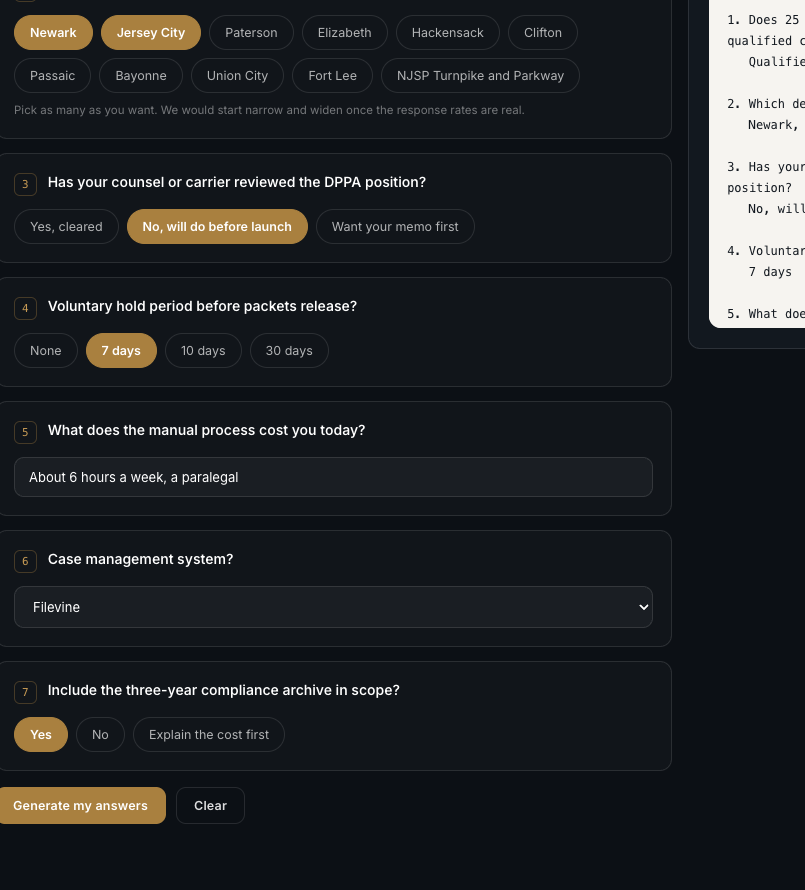
Every build reaches a point where only the client can decide. Instead of a long email, the engine has a screen: click the answers, hit generate, paste the block back. It takes four minutes and it removes the week that a question thread usually costs.